
Turns out, the hardest part isn’t building—it’s what happens after.
You launch, you share, you celebrate—and then the silence hits. No matter how ready you felt, post-launch always feels different. The metrics aren’t moving like you hoped, the feedback’s confusing, and that rush of “we did it” quickly turns into “what now?”

You did it.
You built the thing.
After months of calls, sketches, pitches, revisions, and late-night Slack messages, your product is finally live. You told your investors, you told your friends, you even dared to tell LinkedIn.
And yet… it doesn’t feel done.
Instead of the wave of relief you expected, you’re left with a strange cocktail of pride, exhaustion, and quiet panic. The to-do list is somehow longer now. The feedback’s unclear. The roadmap you built in confidence suddenly feels blurry.
If that’s you — take a breath. You’re not broken. You’re just in the next phase of building: the part no one talks about.
The Myth of “Done”
Somewhere along the way, “launch” became the finish line.
But here’s the truth: launch isn’t the end of building — it’s the start of understanding.
You don’t really know what your product is until real people start using it.
Up until launch, everything you’ve done is based on assumptions — smart assumptions, informed assumptions, maybe even investor-approved assumptions — but still, assumptions.
Once your product hits real users, those assumptions start talking back. Sometimes kindly (“This is great!”), sometimes brutally (“It’s not working on my phone”), but always truthfully.
That’s why launch doesn’t feel like completion. It feels like exposure.
You didn’t just release a product — you released a mirror that reflects exactly what you missed.
The Emotional Hangover No One Warns You About
Before launch, everything feels urgent and unified: one goal, one focus, one mission — get it live.
After launch? The energy diffuses.
Suddenly, you’re managing bugs, customer feedback, investor updates, team fatigue, and the haunting question:
“What now?”
It’s disorienting because the rhythm changes. You move from building fast to learning slow — and that shift can feel like losing momentum, even when it’s exactly what’s supposed to happen.
“Half-Done” Is Actually “Half-Learned”
That half-done feeling? It’s not failure. It’s data.
It’s your product telling you what to do next:
Users aren’t signing up — maybe your messaging isn’t clear.
Users sign up but don’t stay — maybe the value isn’t landing.
Users stay, but don’t upgrade — maybe you’re solving the wrong problem first.
The job now isn’t to build more features. It’s to understand more deeply.
That’s how great products evolve — through a loop of building, learning, and refining.
And ironically, that loop is what makes your startup feel both unfinished and alive at the same time.
What Founders Actually Need After Launch
Once the adrenaline fades, founders don’t need more hype.
They need structure, rhythm, and clarity.
Here’s what that looks like in practice:
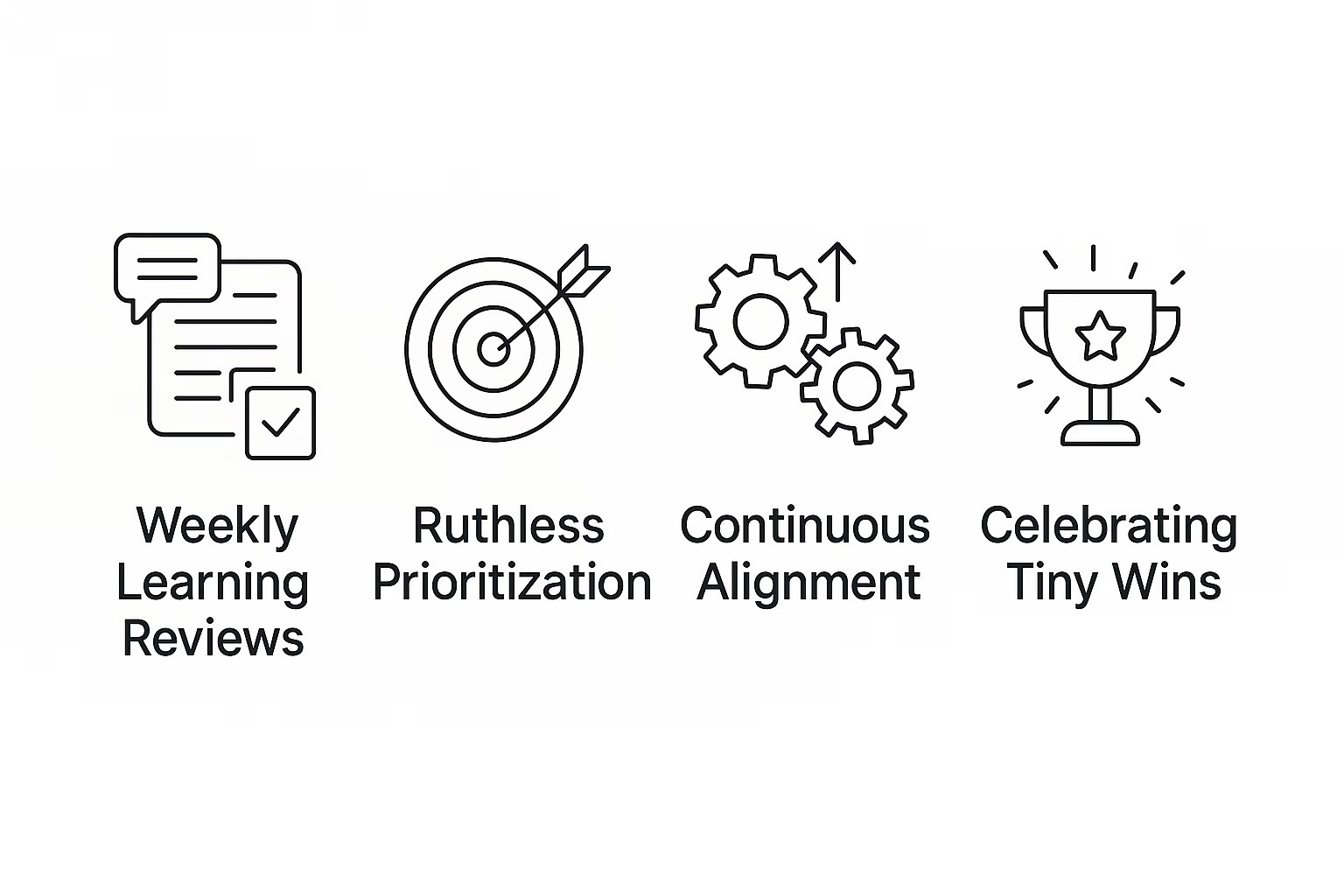
1. Weekly Learning Reviews
Instead of tracking just “what we built,” track “what we learned.”
What did users say this week? What broke? What surprised us?
Momentum comes from progress you can understand, not just progress you can show.
2. Ruthless Prioritization
Every new idea feels urgent post-launch. Don’t fall for it.
List everything. Then circle the three things that actually move retention, adoption, or revenue. Ignore the rest for now.
3. Continuous Alignment
Your dev team, marketing partner, and investors all have different clocks. Sync them. A five-minute alignment call every Friday saves five weeks of frustration later.
4. Celebrate Tiny Wins
You won’t get the dopamine rush of “launch day” again for a while.
Replace it with micro-celebrations — a new user testimonial, a bug fixed, a data insight. That’s how teams stay emotionally alive during the grind.
This is also where having the right partner helps — someone who can look at your product from the outside, spot the signals you’re too close to see, and help you turn all that post-launch noise into real direction.

Redefining Your Role as a Founder
Here’s the shift most founders miss: once your product is live, your job changes.
You’re no longer the builder of things — you’re the builder of clarity.
It’s not about pushing pixels or chasing every feature request.
It’s about connecting dots — between user behavior, team focus, and market signals.
The best founders at this stage don’t obsess over the roadmap; they obsess over learning loops.
They ask sharper questions. They spot patterns faster. They make smaller, smarter moves that compound.
That’s how you turn the “half-done” feeling into a roadmap for what actually matters next.
To Wrap It Up
Every founder feels this way after launch.
The emptiness. The doubt. The quiet.
But that’s not a sign you built the wrong thing — it’s a sign you finally have something real enough to learn from.
So, no — your product isn’t half-done.
It’s just half-understood.
The discomfort isn’t about missing features.
It’s about realizing that “done” came with tradeoffs you didn’t fully see at the time.